
Welcome everyone to the third and final part of this three-part blog post on the most famous Rogue Wave encounters in modern history. Please read Part 1 and Part 2 before reading this post, now let’s get into the last and most violent story regarding rogue waves and the RMS Queen Mary.
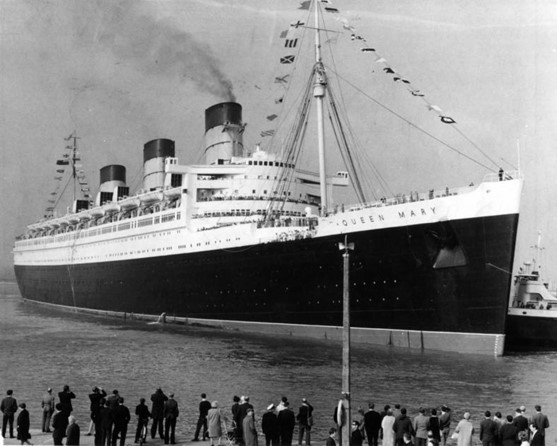
RMS Queen Mary is perhaps the second most famous ocean liner of all time behind the legendary Titanic. More impressive still is that she remains afloat to this day in Long Beach, California. She remains today after nearly a century as a regal reminder of a bygone era. Yes, she still stands as a WW2 hero, an icon of the heyday of transatlantic liner travel, and even a hub for paranormal investigation. However, she came very close to a different fate in 1942 that almost left her memory as the worst maritime disaster in history.
The Queen Mary and her sister the Queen Elizabeth were ordered and began service in the mid 1930’s. Built to replace Cunard Lines aging giants like Aquitania and Mauretania, the new Queens were a welcome addition to the Cunard fleet and the new heartthrobs of the Atlantic. However, this story begins amid WW2. Both Queens had been drafted into war service to ferry troops across the Atlantic. Initially the British Admiralty and US Navy were skeptical to use these ships for troop transport as the losses could be catastrophic if sunk. However, the war demanded troops in Europe so the Queens were put to work as troop ships. Queen Mary would even go on to make a record that she still holds to this day for the greatest number of people on a floating vessel during one of her crossings at 16,683 total passengers and crew.
The Queens and especially Mary were massive targets to the Germans and even Hitler himself put a large bounty on the two ships. However, nature almost accomplished what the Germans could not. In December of 1942, Queen Mary was on a voyage from New York to Scotland with over 16,000 American troops aboard. On the fourth day of the crossing Queen Mary was braving a nasty storm. The journey had been rough but she was only 700 miles from Scotland. She would ride out the storm and reach her destination within a day. Then seemingly out of nowhere, the crew spotted a massive 90-foot wave headed straight for her port side. The ship was nearly parallel with the wave and with no time to change course the massive wave struck the length of the ship. Windows were smashed in and lifeboats were ripped from the ship as the wave made contact. Worse still the massive wave began to cause the ship to list to starboard. She listed to a terrifying 50 degrees to starboard and stay that way for ten seconds or so. The ship did begin to right itself and come back to an even keel. However, many experts agree that if she had listed just a few more degrees she would have exceeded her center of gravity and capsized. Considering the circumstances of wartime and the fact that she was traveling alone, all hands would have likely been lost if she had rolled over and we may never have known what happened to the ship.
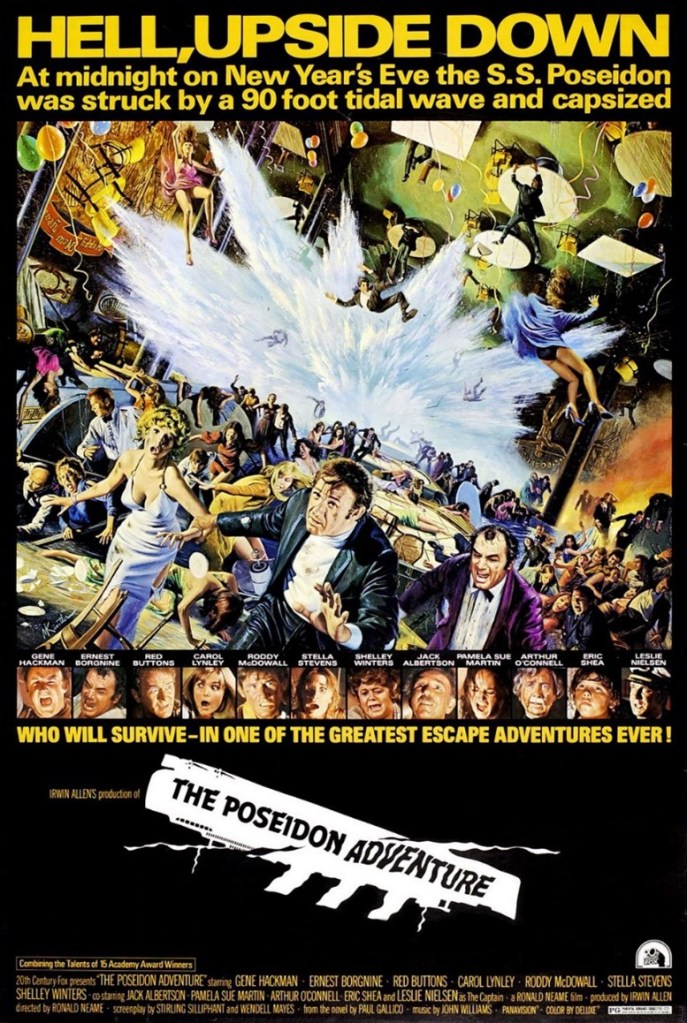
If this story sounds familiar it’s because this event was a direct inspiration for the 1972 film The Poseidon Adventure. In the film a ship identical to the Queen Mary hits a massive Rogue Wave on her side and capsizes killing most onboard. A fictional tale that was almost a reality.
In conclusion, though Rogue waves have since been proven to be a real natural phenomenon, the danger is not gone. If history and these stories have taught us anything it’s that bigger and newer ships are at the same risk to Rouge Waves as older and smaller ships were. While these three stories might present these encounters as very survivable, one must not let survivor bias influence maritime safety. Who knows how many mysterious disappearances of ships throughout history were the result of Rouge Waves? The key thing to remember is that no matter how big or advanced a ship is, the sea is always bigger.
Thanks for reading this three-part post! I hope you enjoyed and as always if you have any comments about this post or the last two posts feel free to leave them below. A big thanks to Ocean Liner Designs and Big Old Boats for the information and inspiration needed to create these posts, definitely check out their channels if you like this type of content. Have a great week everyone!


Leave a Reply