
Hello everyone and welcome to a new one-part post on the first jet airliner, the De Havilland Comet, and how it paved the way for the jet age. In this post, we will go over the planes’ initial development, career, downfall, and ultimate impact and lessons learned for the aviation industry.
At the end of the second world war, commercial aviation sat comfortably as an American stronghold. See America had been a titan of industry during the war producing several piston-powered warplanes for the Allies. Then when the conflict was over, many of those manufacturers continued producing these aircraft but for civilian use as airliners. The switch was so quick that at one point shortly after the war 90% of civilian air travel was on American Douglas DC-3s.
On the other side of the pond, however, Britain’s factories sat mostly destroyed after years of bombardment by the Germans. The UK knew that it couldn’t compete in piston aircraft when it came to production, so they thought up an alternative. In 1944 the German Luftwaffe introduced the first jet-powered fighter, the Messerschmitt Me 262. This aircraft was one of the German’s secret weapons and allowed them to beat almost any piston-powered fighter they came across. However, with the war over it was Britain who now had access to the most state-of-the-art jet technology in the world, and this would be their trump card.
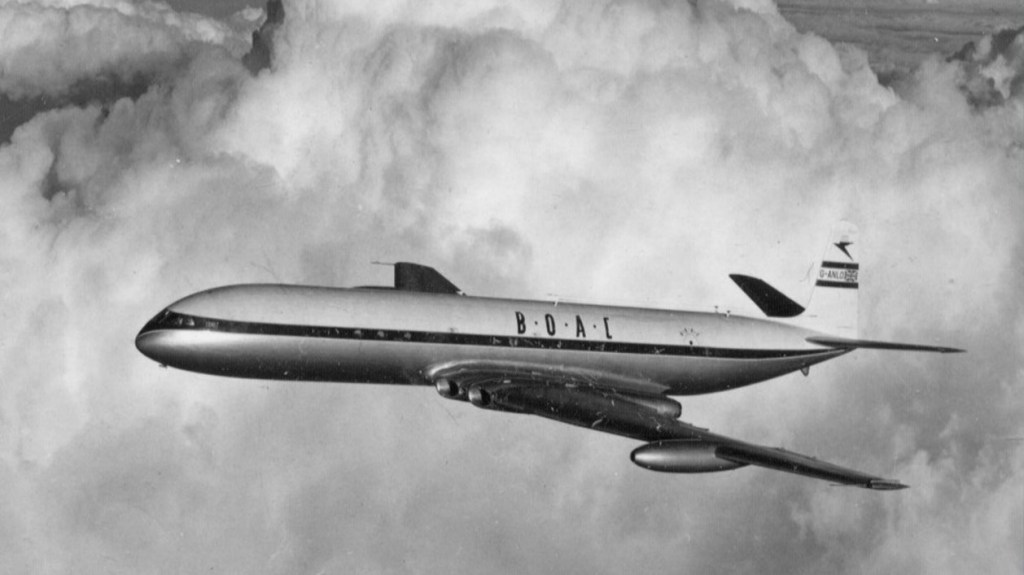
Thus, in 1945 the famed British aircraft maker De Havilland set to work at the government’s request to create the world’s first commercial jet airliner. Though no small feat, the British engineers worked tirelessly to develop an airplane unlike any that had come before it. With a slick profile, four Rolls Royce turbofan jet engines, and innovative square windows, the newly named Comet was like something out of a comic. The plane was meticulously tested and flew her first test flight on July 27, 1949. Then after a few more tests and modifications, the Comets were ready for delivery and the first commercial flight took place on January 9, 1951.
The Comet was an instant success! Glorified by the media and adored by the public, the world’s first jet airliner was the heartthrob of the skies. The Comet could fly nearly twice as high and fast as any of her piston-powered rivals, which made her extremely desirable to passengers. She set the standard for comfort and luxury, and it looked like Britain had secured a spot as the frontrunner of jet travel, so why aren’t we flying De Havilland planes today?
Despite the Comets’ initial success, being the first at anything comes with unexpected problems. Shortly after the plane’s launch crashes started to occur. The first few were minor and blamed mostly on pilot error. However, as crashes became more violent and deadly questions arose about the plane’s safety. This all reached a head in 1954 when BOAC flight 731 broke apart midflight leading to the loss of all 36 onboard. After an investigation, metal fatigue was found to be the culprit. See jet airplanes fly at a height where oxygen is thin, and temperatures are too cold for people. To combat this, the cabins of these aircraft are pressurized. This was known and tested for by the Comets engineers, yet pressurization had caused a metal fatigue failure and crash of their aircraft, but how? Well, remember those luxurious square windows? Ever wonder why every plane you’ve ever flown on had round windows? This is why. The Comet’s square windows allowed for uneven pressure building at the corners of the Comet’s windows, and after several pressurizations and depressurizations the metal around the window’s corners weakened. Eventually, this weak point gave in creating a crack which grew instantly slicing the aircraft and causing an explosive decompression.
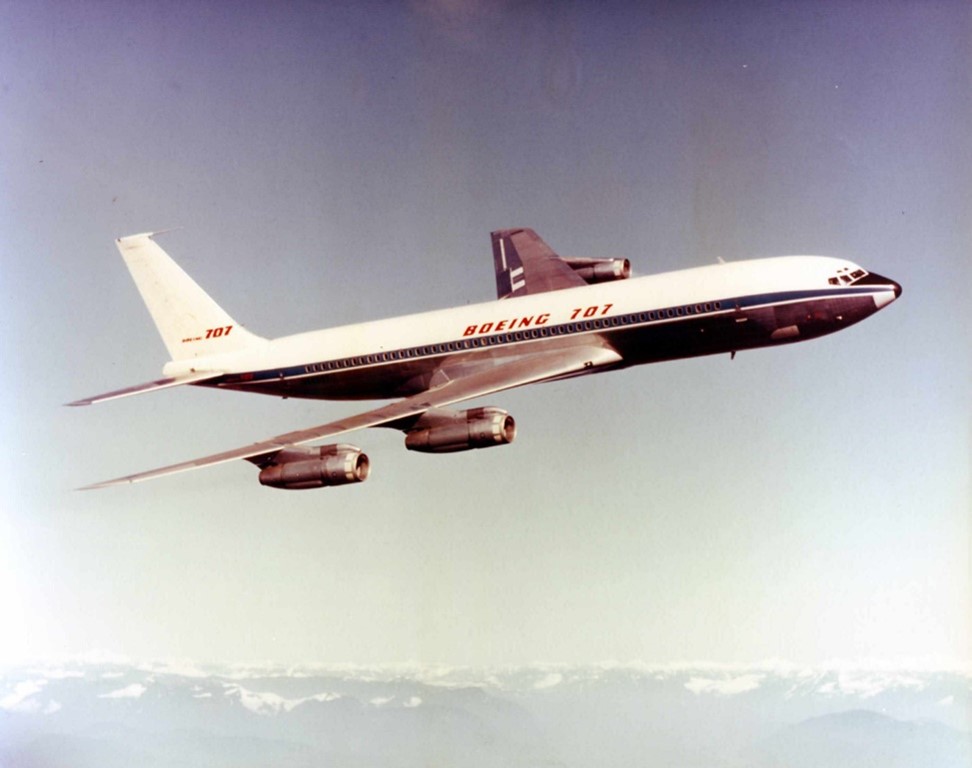
After the accident De Havilland reengineered the Comet to address this problem, but the damage was done. Public confidence in the aircraft had waned and in the time it took them to iron out the Comet the American’s caught up. Boeings 707 and Douglas’s DC-8 were larger and more efficient than the Comet. Their sales skyrocketed and De Havilland saw orders diminish for the Comet. Funny enough, Boeing and Douglas openly admitted that by studying the Comet’s flaws they made their jets better. I suppose it just goes to show the dangers of being first to the party. Finally, Comets would see service for decades to come but never the success they initially saw. De Havilland would continue to make planes, but never on the scale of their American Competitors. Despite the UK’s best efforts, America would come to dominate not only the piston age but the jet age as well.
Thanks for reading! I hope you enjoyed and as always if you have any comments about this post feel free to leave them below. A big thanks to Dark Skies and Mustard for the information and inspiration needed to create these posts, definitely check out their YouTube channels if you like this type of content. Have a great week everyone!
 Fish's Facts
Leave a comment