
Welcome back everyone to a new three-part blog post on three of the most famous stories involving Rogue Waves from modern history. This first post will go over the story of one of the first notable and reliable instances of a Rogue Wave and the RMS Lusitania. The second and third posts will share similar stories involving the RMS Queen Mary and SS Michelangelo. Now without further ado, let’s get right into the first post!
For centuries Rogue Waves remained the stuff of myths and legends. Despite the legends and stories from sailors throughout the years, many in the scientific community paid little mind. Many thought that waves big enough to swamp ships in one fell swoop were all but impossible. However, as the age of the ocean liner strengthened and telecommunications became better and better, the existence of these monster waves became harder and harder to refute. Thus, we begin with our earliest entry in this three-part series, the RMS Lusitania.
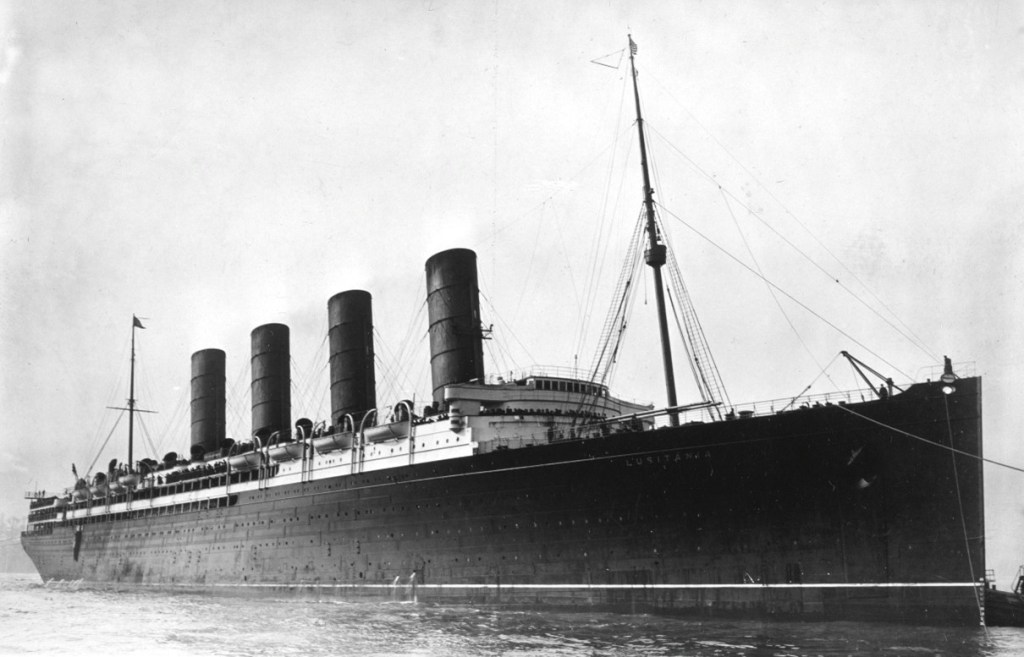
Built for the Cunard Line in 1906 as part of the big three including her sisters RMS Aquitania and RMS Mauretania. RMS Lusitania was the first of the big three, which White Star would design the Olympic Class specifically to rival. She was at the time of her launch the largest passenger ship in the world until her sister Mauretania was completed three months later. While today Lusitania is well known for her sinking and its significance to America’s decision to join the first World War. She was also one of the first ships to have a documented and verifiable encounter with a rogue wave.
In January 1910, Lusitania was on a transatlantic crossing to New York. A winter storm was barreling down on the ship as she battled fifty-mile-per-hour winds and thirty-foot seas. An unpleasant experience but nothing outside of what she was designed to handle. See ocean liners were kept to very strict time schedules like airplanes today, so when there was a storm, you just went through it. All seemed mundane as the Lusitania steadily made her way through the storm pitching up and down as she made her way through the waves, but who could have guessed what was coming?
At 6:00 pm the ship’s Captain was relieved of duty for the night, but only minutes after his departure the lookouts noticed something on the horizon. Headed straight for the ship was a wall of white water. The wave which has been estimated to have been 75 feet high was barreling down on the ship. To make matters worse, she was crashing into a trough which only increased the wave’s height over the ship. The collision was all but inevitable.
*Crashing and grinding metal noises* The massive wave slammed into the Lusitania. Easily topping her bow the wave slammed into the ship’s superstructure and bridge and continued along her length until it passed the ship. The windows of the bridge were smashed open by the wave and flooded the bridge with five feet of water. Miraculously none of the crew were injured. Even a compass man who had been on the top deck of the bridge near the funnels was ok despite having water rush past him up to his knees despite being nine stories above the ocean’s surface.
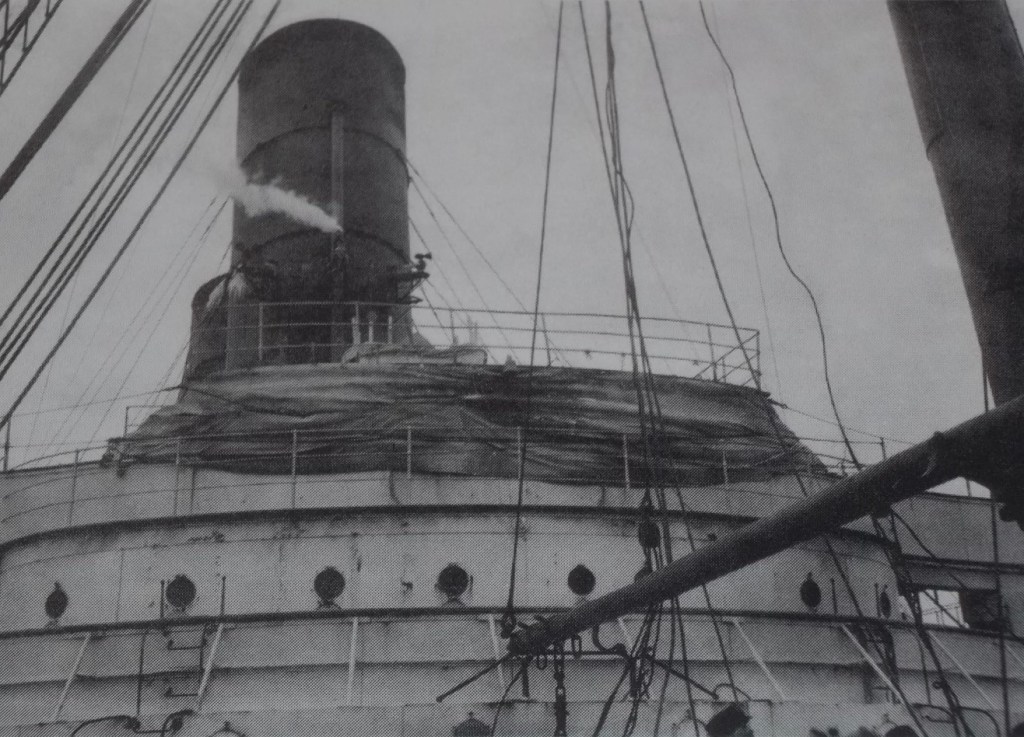
After the collision, the bridge and forward superstructure were crushed and smashed in by the wave up to two inches. Furthermore, four of the ship’s one-ton lifeboats were ripped from their davits and never seen again. Luckily the ship was mostly undamaged and continued to New York to finish its journey and receive repairs. RMS Lusitania survived the oceans attack with no harm to her crew, passengers, or major damage to herself. However, this is not always the case when a massive ship meets a massive wave, look out for that story in part 2.
Thanks for reading and if you enjoy this post please feel free to leave a comment. A big thanks to Ocean Liner Designs and Big Old Boats for the information and inspiration needed to create these posts, definitely check out their channels if you like this type of content. Look forward to part 2 soon!
 Fish's Facts
Leave a comment